Ready for Anything: TMC Strengthens SERTs with Focus on Emergency Action Plans
March 28, 2026

As a result of findings by the United Steelworkers Specialized Emergency Response Trainers (SERTs)’ visits to areas affected by natural disasters, the USW Tony Mazzocchi Center is now integrating key aspects of Emergency Action Plans (EAPs) into its workshops and training curriculum. The effort not only bolsters the TMC's “all-hazards” approach to health and safety, but it bridges gaps in knowledge that too-often exist between workplace hazards and community exposure.
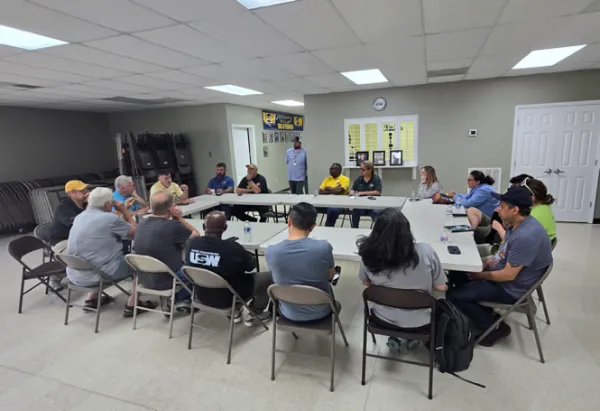
Given that Emergency Action Plans prepare organizations to handle everything from workplace violence and fire to hurricanes and hazardous material releases under a single, cohesive framework, understanding how to effectively adapt lessons from one workplace to another, from one community to another, can be challenging. To solve this problem, the TMC has been applying fundamental principles from Hazard Mapping, one of its most popular training curriculums. The approach is to get people present at the training to illustrate the particular hazards in their workplaces and community. Participants work in small groups and then report their findings to the group. During whole-group discussions, lists of hazards and how to best prepare for them are analyzed to see if their existing EAPs address those hazards. The approach emphasizes preparation rather than pure reaction to adverse events. As a result of these lively discussions, the SERTs themselves are also becoming more proficient at guiding conversations in productive ways.
But EAPs aren’t invented whole cloth, quite the contrary, EAPs must conform to Occupational Safety and Health Administration (OSHA) standards concerning EAPs. For example, EAPs must outline evacuation routes, communication strategies, shelter locations and roles for emergency personnel. Regular drills and updates to these plans are also mandatory, as they reinforce awareness and adapt procedures to changing risks or infrastructure. Other requirements include listing potential chemical releases, fires, explosions or power failures. They also define responsibilities for employees, establish alarm systems, and provide step-by-step procedures for shutdowns, evacuations and emergency containment, and just as importantly, how to coordinate with multiple local agencies so that there is seamless communication throughout.
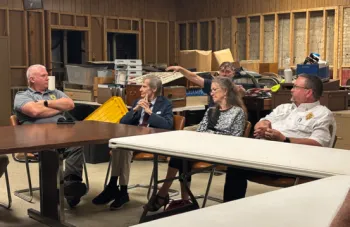
In addition to mandatory OSHA requirements, the SERTs have been emphasizing issues they’ve discovered in the field. Some of these findings can have life-and-death impacts during an emergency. For example, during the early critical phases of a disaster emergency, the SERTs found it crucially necessary for plant personnel (or community leaders) to be fully aware of people with disabilities. Issues of body mobility, deafness or language barriers must be accounted for before a disaster strikes.
The SERTs (in close coordination with the TMC), foresees the study and application of EAPs as only growing in the coming year. Some next steps are likely to include expanding the SERTs curriculum to include a module on EAPs to be tested in the field and improved by way of live input from union and community members.